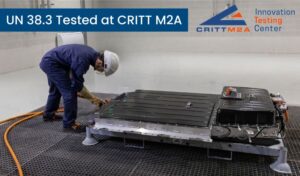



UN 38.3 battery transport is a key requirement to ensure the safety of lithium batteries during shipment. Indeed, this international regulation requires a series of rigorous tests before any market release or transport. Thus, manufacturers must anticipate these constraints to secure their projects.
This regulation aims to prevent risks related to transport conditions. These include shock, vibration, temperature variations, and short circuits. Therefore, validating performance under real-life conditions is essential to ensure battery reliability.
The CRITT M2A supports manufacturers in complying with these regulatory requirements. Thanks to a comprehensive testing offering, the center meets the needs of the electromobility and energy sectors. Moreover, its technical expertise helps secure validation processes and anticipate logistical constraints.
The services provided include the simulation of transport constraints to reproduce real conditions. In addition, the CRITT M2A performs safety validation of cells, modules, and battery packs. These tests ensure the robustness of products before shipment.
Furthermore, the CRITT M2A provides technical expertise to support market deployment. By anticipating testing campaigns, manufacturers can optimize timelines and reduce risks. As a result, regulatory compliance becomes a real performance driver.
In a context of rapid growth in electromobility, mastering UN 38.3 battery transport requirements has become a strategic challenge. Indeed, these tests ensure safety, compliance, and product competitiveness on the international market. Finally, the CRITT M2A supports its partners in developing reliable and innovative solutions.